
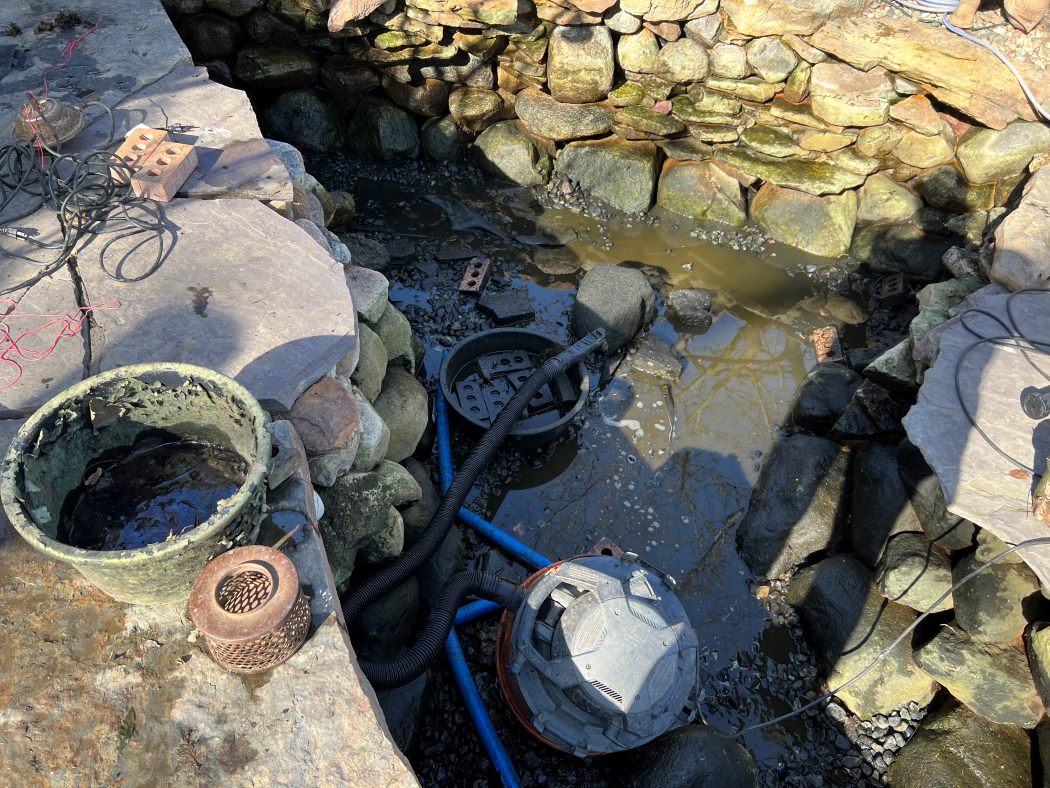
The First Step to Locate a Leak: The Pump-Off Water Level Diagnostic Test
Experiencing unexplained water loss in your water feature—be it a tranquil Koi Pond or a grand Waterfall—is a stressful experience. Before attempting a physical search that could cause further damage, our master craftsmen at The Pond Doctors division advise performing a simple, yet highly effective, diagnostic test. This test, honed by 60 years of cumulative hands-on mastery since our founding in 2012, quickly isolates the problem area, allowing us to proceed with targeted Water Feature Repairs.
When trying to locate the source of your water loss, the process is methodical and precise:
The first step is to turn off the waterfall/pump, mark the current water level, and wait for 24 hours. If the water level drops to a consistent point, the leak is likely at that level, often along the edge of the liner or in the stream bed. If the water continues to drop past the edge of the pond basin, the leak is likely in the main pond area or a bottom drain connection.
This exceptional precision in diagnostics is the most crucial step in minimizing the time, cost, and disruption associated with Leak Detection & Repair. Here is a detailed breakdown of this vital first step.

I. Phase One: The Waterfall/Stream Bed Check
The majority of pond leaks occur not in the main basin, but in the plumbing, stream, or waterfall structure. This test is designed to isolate and eliminate this common culprit.
- Turn Off and Mark the Level: You must turn off the waterfall/pump and then mark the current water level. This stops the circulation and, therefore, stops the pump from pushing water to the highest parts of the feature. Use a piece of duct tape or a marker on the inside of the liner or skimmer wall.
- Wait and Observe: Wait for 24 hours. This period is critical as it allows for the water lost to natural evaporation to be differentiated from water lost to a leak.
- The Conclusion: If the water level drops to a consistent point, then the leak is most likely in the stream bed or waterfall structure. This happens because the water that was retained in the stream bed when the pump was running has now leaked out, settling at the lowest point of the liner that is still intact. This leak is often along the edge of the liner or in the stream bed rockwork.
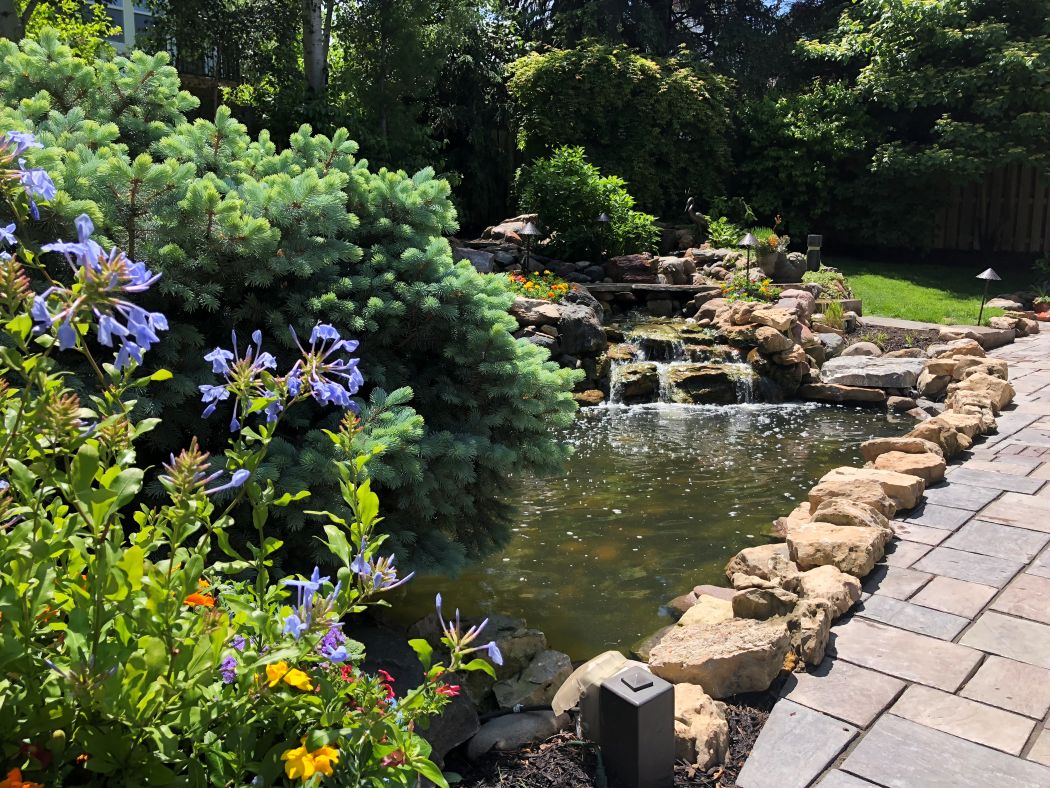
II. Phase Two: The Main Pond Basin Check
If the water continues to drop even after the waterfall/stream has been isolated, the structural failure is more severe and is located in the pond itself.
- Water Continues to Drop: If the water continues to drop past the edge of the pond basin, this means the breach is below the water line of the main holding area.
- The Structural Conclusion: The leak is likely in the main pond area or a bottom drain connection. This is where professional intervention is immediately necessary, as a full physical search is required. The master craftsman can use specialized detection equipment to pinpoint a small tear in the liner that is otherwise invisible to the naked eye.
III. Conclusion: Targeted Repair Saves Time and Money
This simple diagnostic test is an essential tool for every pond owner. By performing this step, you can clearly communicate the source of the leak to our Water Feature Repair technicians, allowing us to arrive prepared with the right tools and strategy.
The master craftsmen at Pond Doctors ensure that the first step is to turn off the waterfall/pump, mark the current water level, and wait for 24 hours. This is the key to minimizing disruption and protecting the structural integrity of your Omaha water feature with exceptional precision.